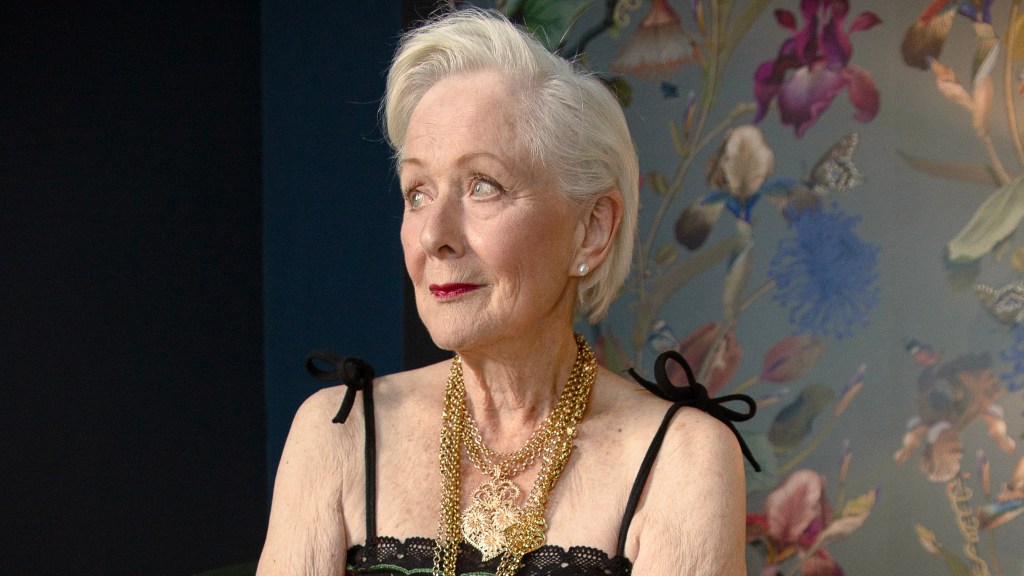
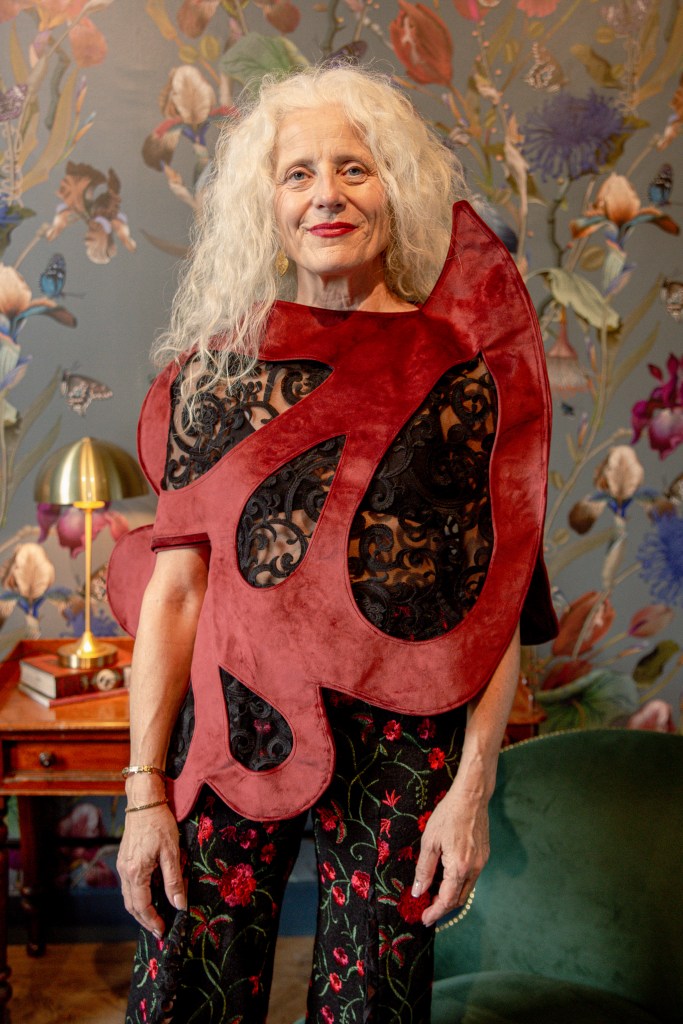
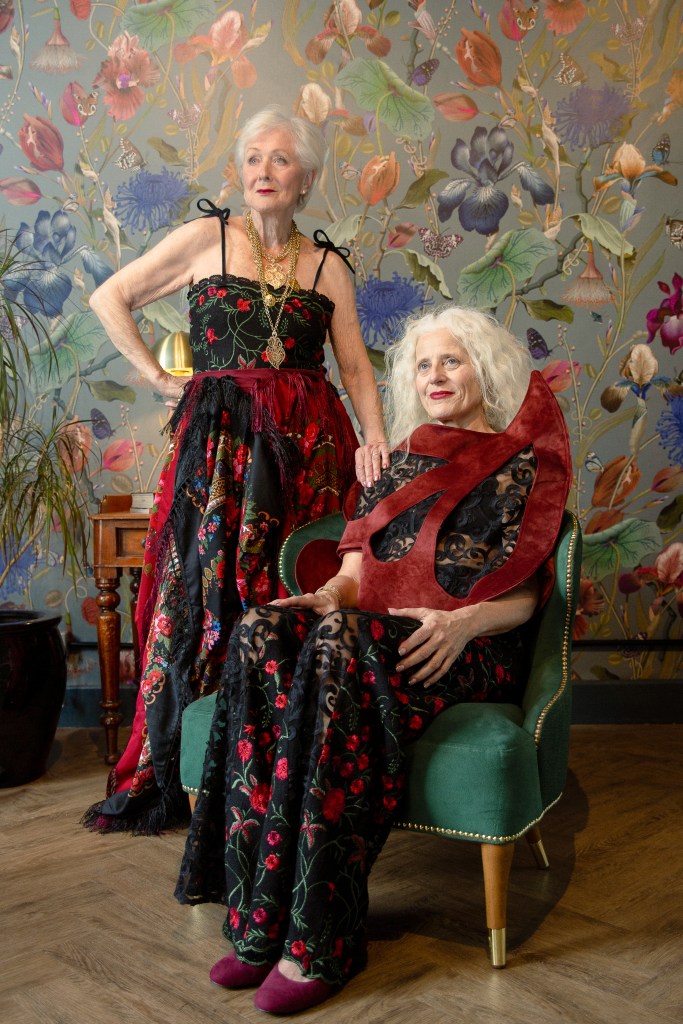
Portuguese fashion designer Carolina Sá Couto, a Regent’s University London graduate, presents her debut collection, Saudade—a word with no direct English translation, capturing a longing for something loved that is absent, or perhaps never fully existed. Through meticulous craftsmanship and cultural storytelling, this collection interweaves Portuguese traditions, emotional inheritance, and the influential women of her heritage into every garment.
Rooted in cultural memory, womanhood and craftsmanship, the collection draws on Portuguese traditions, emotional inheritance and the women who shaped her upbringing. Through natural textiles, delicate references to “lenço dos namorados” embroidery and the haunting influence of Amália Rodrigues, Sá Couto explores fashion as both storytelling and preservation. We spoke to the emerging designer about studying in London, finding identity through displacement and why clothing should carry emotional weight as much as aesthetic value.
What first inspired you to get into fashion design, and when did you realise it was something you wanted to pursue professionally?
It started with my great-grandfather on my mother’s side, he was a tailor and someone I never met but grew up hearing stories about. He always had his door open with people constantly passing through his atelier and there was something about that image that stayed with me. Also on my father’s side, my grandmother made clothes when she was restarting her life, and I have this very clear memory of making clothes for my dolls with her. Those two things planted something early. Then came product design with a focus in textiles and with that fashion became the natural place where everything I cared about, the material, the craft and the narrative came together.
How has your experience at Regent’s University London helped shape and develop you as a designer, both creatively and professionally?
One of the things I valued most was working with tutors who are genuinely in the industry, people like Georgia Wilson and Matija Copp, who brought a real professional perspective into the room. That kind of contact changes how you think about your work. It’s not just academic feedback but feedback from someone who has navigated the industry and understands what it actually demands. Alongside that, the scale of the course meant I could develop my own creative voice without it getting diluted, while also being exposed to real production constraints like my personal budgets, supplier relationships in Portugal, timelines… That balance between creative development and professional reality is something I’m very grateful for.
What inspired your graduate collection, and what story were you hoping to tell through it?
The collection is called Saudade. It’s a Portuguese word with no direct translation, a longing for something loved that is absent, or perhaps never fully existed. I wanted to explore that through cultural memory and womanhood. The women in my life, the traditions I grew up around, the “lenço dos namorados” embroidery, fado music. Amália Rodrigues was an important presence in the work; her voice carries saudade in a way that feels almost physical. There’s grief in it but also beauty, and I wanted that tension to live in the garments themselves.
As a female Portuguese designer studying in London, how do your roots and cultural background influence your work?
Being Portuguese in London means holding two places at once. That displacement makes you pay closer attention to where you come from. Portugal has a rich visual and emotional culture that doesn’t get enough space in international fashion, and my work tries to bring that forward not as aesthetic reference but from the inside of that experience.
Are there any Portuguese creatives, designers, or artists that particularly inspire you and your creative process?
Paula Rego, the directness of her paintings, the refusal to be decorative. But honestly, my deepest inspirations tend to come from people I encounter. Travelling has given me some of the most formative creative moments. Once, in São Tomé, the owner of a restaurant I was visiting invited me into her home and showed me her entire dress collection, telling me the story of each piece. That kind of encounter when someone is sharing their personal relationship with clothing, the memory attached, how they present themselves to the world that feeds my work in a way that looking at other designers doesn’t always do.
How would you describe the ideal Carolina Sá Couto client or consumer? Who are you designing for?
Someone who thinks about materials. My work is deeply connected to natural fabrics like burel, jute, linen, cotton velvet and the person I’m designing for understands and values that. She’s not just buying a silhouette but she’s aware of what the cloth is, where it comes from, how it moves. I’m also interested in designing for older women. Maturity and presence interest me far more than designing for youth as a default. She’s someone who wants to wear something with weight to it, without ever compromising the silhouette.
What has your experience been like studying on a predominantly female course? Has it shaped the way you view collaboration or creativity?
Over these three years I built a bond with my class that I didn’t expect and won’t forget. The feedback they gave me and their input on the collection is something that will stay with me. Collaboration felt natural because there was a lot of mutual understanding without needing to explain yourself from scratch. That said, I also think it’s important to seek out broader perspectives, which is something I’ve always tried to do outside of the course as well.
What women in the fashion industry inspire you the most, and why?
Stella McCartney even if she’d be the first to point out she’s rock royalty because I think she’s genuinely shifted awareness around sustainable materials for an audience that buys into a brand or even with fast fashion collabs. That’s a harder thing to do than it looks. Suzanne Lee too, as a pioneer in biotechnology and material innovation she’s expanding what fashion can even be made from. And Rei Kawakubo, for building an entire world entirely on her own terms.
Fashion leadership roles are still often dominated by men. As a young female designer entering the industry, how do you navigate that reality?
I think about it, but I try not to let it become the frame I work within. The most useful thing I can do is stay close to my own instincts, be rigorous, be specific, and make work that has something genuine to say. I’m drawn to spaces that value craft and concept equally, and I tend to trust those environments more than ones where the conversation is mostly about status. The industry is big enough that you can find your corner of it, and I’m more interested in building something real within that than trying to fit into structures that weren’t designed with people like me in mind.
Looking ahead, what are your aspirations after graduation? Is there a future for you in design?
Yes, definitely! But my future feels like it sits somewhere between design, creative direction, and production. I’m drawn to the idea of working in costume and styling, being the person who selects, sources, and gives meaning to what is worn in a show, a film or a performance. That role of translator between concept and image is something that genuinely excites me. I want to keep working in spaces where the garment, the narrative, and the image are treated with equal weight and eventually, build a practice that I can call entirely my own.


Leave a comment