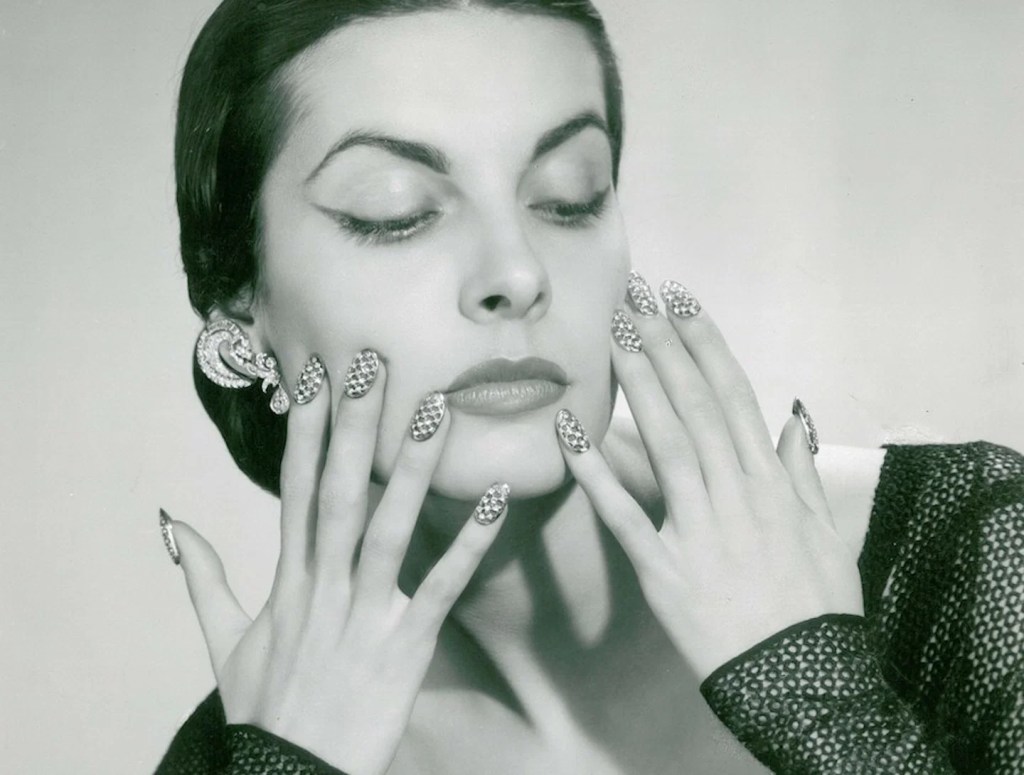
More than 70 years after Mellerio patented decorative nail ornaments, the historic Maison is bringing the idea to life. We speak to Creative Director Laure-Isabelle Mellerio about the rediscovery of the 1951 patent, the future of fine jewellery and why sometimes the most forward-thinking ideas are found in the past.
Founded in 1613, Mellerio is one of Europe’s oldest family-owned jewellery Maisons. Across fourteen generations, the family has created jewellery for some of history’s most notable figures, from Marie de’ Medici and Marie Antoinette to Queen Victoria, the Maharaja of Kapurthala, the Queens of Europe and the Tsarina of Russia.
Yet among its extraordinary archives lies an idea that feels surprisingly modern: jewellery designed specifically for the nail.
In 1951, Mellerio filed a patent for a garniture décorative pour ongles or “decorative nail embellishment,” anticipating the rise of nail art and nail jewellery by more than seven decades. Inspired by the original models behind the patent, the Maison has now brought the concept into the present day, translating its historic vision into a new category of fine jewellery.
For Laure-Isabelle Mellerio, Creative Director and the 14th generation of the Mellerio family, the collection represents more than an archival revival. It is an example of how the Maison’s history can continue to inform its future.
“Sometimes an idea needs to wait for the world around it to catch up,” she tells us exclusively.
We spoke to Laure-Isabelle about carrying a 400-year-old legacy into a new generation, rediscovering one of Mellerio’s most unexpected creations and why the future of fine jewellery may lie beyond the traditional ring, bracelet, necklace and earring.
Laure-Isabelle, what does it mean to you to have kept the House of Mellerio in the family for more than 400 years, making it the oldest family-owned jewellery house in Europe?
It is something I feel very proud of, but I also feel a major sense of responsibility. Mellerio has survived for more than four centuries because every generation has found a way to remain true to the identity of the Maison while continuing to evolve.
As the 14th generation, I don’t see our heritage as something static or something that belongs only to the past. It is a living source of inspiration. My responsibility is to understand how to preserve Mellerio’s unique spirit while, at the same time, giving it a contemporary expression so that it can be passed on to the next generation.
Mellerio filed a patent for decorative nail ornaments in 1951, decades before nail art became a global phenomenon. When did you first rediscover this piece of the archive, and what was your reaction?
Our archives are extraordinary because you can constantly discover ideas that feel surprisingly modern. When we came across the 1951 patent for nail jewellery, I was immediately fascinated.
It was such an unexpected object, but it also felt completely Mellerio because it is both precious and playful. What struck me most was how contemporary the idea felt.
Today, we think of nail art and nail jewellery as expressions of a very current beauty culture, yet Mellerio was imagining the nail as a place for fine jewellery more than seventy years ago.
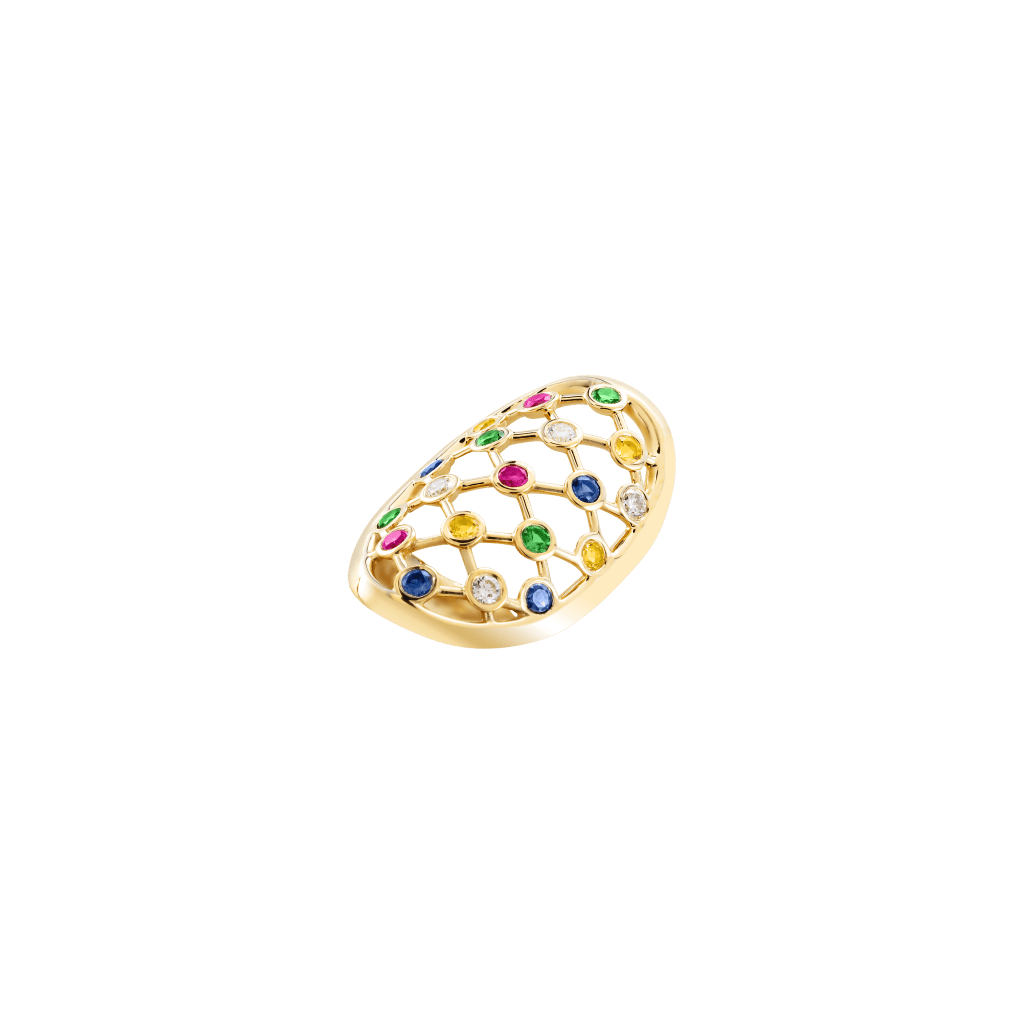
The patent remained unrealised for more than seven decades. Why did this feel like the right moment to finally bring the idea to life?
Sometimes an idea needs to wait for the world around it to catch up.
In 1951, the concept was incredibly forward-thinking, but today there is a completely different relationship between jewellery, beauty and self-expression. People are much more interested in wearing jewellery in unexpected ways and in challenging traditional ideas about where precious objects belong on the body.
Luxury often follows trends, but this story suggests Mellerio anticipated one by more than seventy years. What does that say about the role of intuition in design?
Intuition is essential. The most interesting creations are rarely born from looking at what everyone else is doing. They come from curiosity, instinct and sometimes from allowing yourself to imagine something that might seem strange or unnecessary at first.
That is something I find very inspiring about this patent. Whoever conceived it in 1951 was not responding to a nail-jewellery trend; there was no trend. They simply saw another possibility for adornment.
For me, that freedom of imagination is one of the great lessons contained within the Mellerio archives.
As Creative Director and a member of the 14th generation of the Mellerio family, what responsibility do you feel when deciding which archival ideas deserve a second life?
I try not to approach the archives with nostalgia. The question is never simply, “What can we bring back?” It is, “What can speak to us now?”
There are more than four centuries of drawings, objects, techniques and ideas within the history of Mellerio, so the possibilities are enormous. But something deserves a second life when there is a genuine dialogue between past and present.
With the nail jewellery, that connection was immediate. The idea was born in 1951, but its spirit feels incredibly relevant today.
My role is to respect the original idea while allowing it to evolve rather than treating the archive as something untouchable.
Were there any particular technical challenges in creating a piece that is both luxurious and comfortable enough to sit on the nail?
Absolutely. The scale changes everything. A piece worn on the nail has to feel incredibly light and almost effortless, while still possessing all the refinement and precision we expect from fine jewellery.
We had to think carefully about proportions, weight, balance and how the jewel interacts with the hand and its movement. There is very little room for excess. Every detail becomes important when you are working at such an intimate scale.
These pieces showcase Mellerio’s signature openwork craftsmanship. How challenging was it to translate techniques more commonly associated with rings or brooches into something as delicate as a nail ornament?
That was one of the most interesting aspects of the project. Openwork is part of Mellerio’s vocabulary because it allows us to create something precious without making it feel heavy.
For the nail pieces, that quality became particularly important. The openwork gives the jewel lightness and allows the nail itself to become part of the composition.
But working at this scale demands enormous precision from our artisans. It is almost like creating a miniature architecture. The structure has to be strong enough to function as jewellery while remaining incredibly delicate visually.
Nail art has become a powerful form of self-expression, particularly through social media. Did today’s beauty culture influence the timing of this launch?
Yes, certainly, although I wouldn’t say we created the collection because nail art is fashionable.
What interested me was seeing how much creativity has moved onto the nail. There is an extraordinary culture around manicures today, and people use their nails almost as tiny canvases to express mood and personality.
That contemporary context made us look at the 1951 patent differently. It felt as though an idea from our archive could suddenly enter into a very current conversation.
Who do you imagine wearing these pieces? Are they designed with existing Mellerio collectors in mind, or do you hope they’ll introduce a new audience to the Maison?
I hope both.
I can imagine a Mellerio collector being delighted by the historical story and the craftsmanship, but I also love the idea that someone might encounter Mellerio for the first time through something as unexpected as nail jewellery.
Fine jewellery can sometimes feel very codified, and this collection challenges that. You can wear it with other Mellerio pieces or make it the only jewel you are wearing.
There is something playful and personal about it, and I think that can speak to a new generation while still feeling completely authentic to the Maison.
What has working on this collection taught you about Mellerio’s history, or even about your own family’s legacy?
It reminded me that innovation is also part of our heritage.
When a Maison has existed for more than 400 years, people naturally think first about tradition, but our history is full of experimentation and curiosity. The nails are a wonderful example of that.
It made me think about my family’s legacy as more than a collection of things passed down to me. It reminds me not to be afraid to create something unexpected.
That is perhaps the most important thing for me to continue.
Where do you see fine jewellery evolving over the next decade?
I think fine jewellery will become increasingly personal and less governed by traditional rules. People are already mixing high and low, old and new, precious jewellery and fashion, wearing pieces in ways that feel very individual.
I think we will also see jewellery move beyond the conventional categories of necklace, bracelet, ring and earring. The body offers many possibilities for adornment, and the nail jewellery is one example of that.
At the same time, I believe provenance and authenticity will become even more important. In a world where so much can be produced instantly, there is something very meaningful about an object that carries the hand of an artisan and the history of a Maison.
For Mellerio, the future is very much about that balance.



Leave a comment